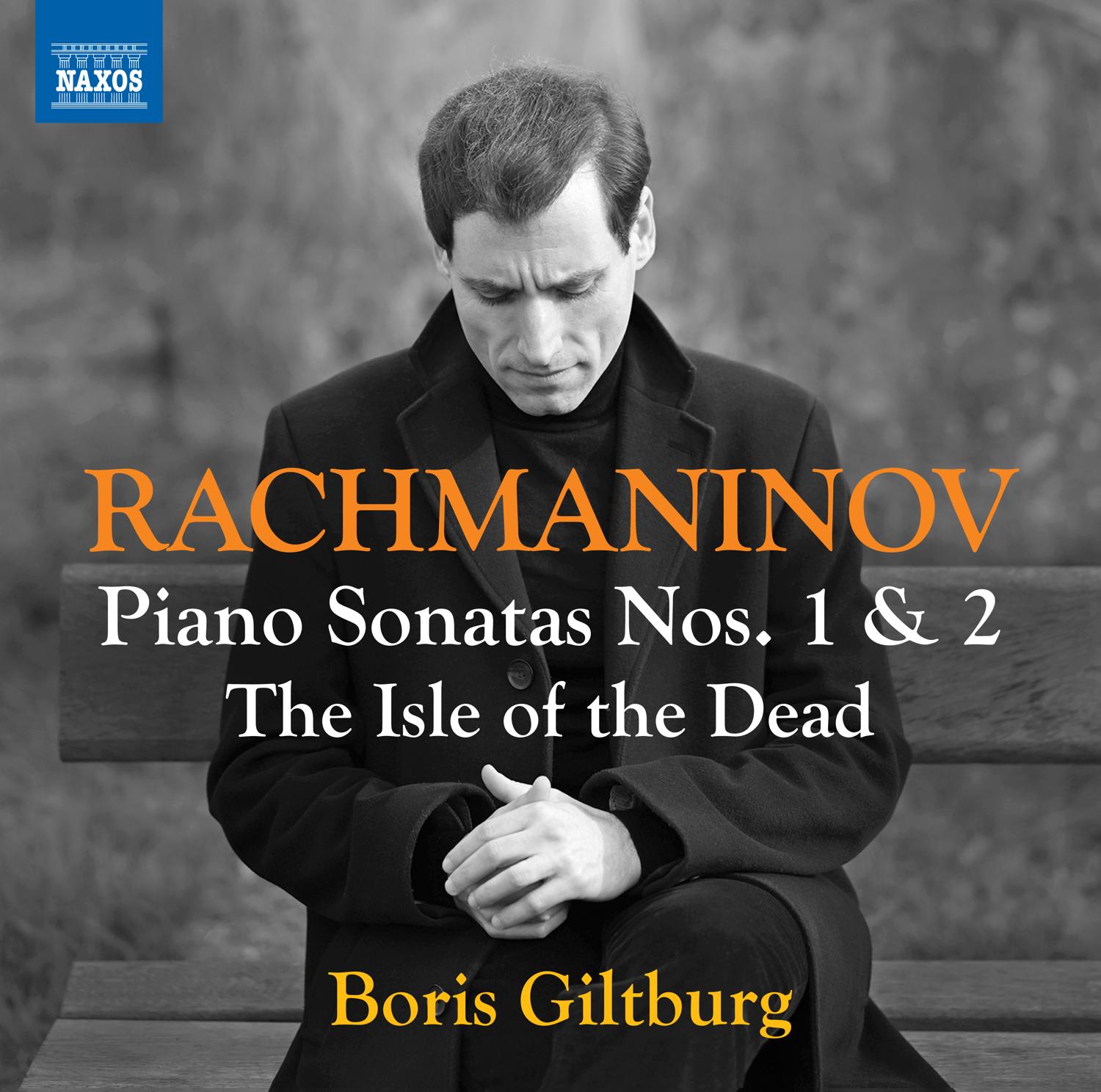
Rachmaninov: Piano Sonatas Nos. 1 and 2, The Isle of the Dead
(arr. G. Kirkor and B. Giltburg for piano)
Listen Now
About
Symphonic in scale and with great dramatic power, Rachmaninov’s Piano Sonata No. 1 in D minor is an underappreciated masterpiece, depicting a tremendous range of human emotions. The turbulent and brilliant Piano Sonata No. 2 in B flat minor is heard in the 1931 revised version which clarifies textures and streamlines the work, heightening its emotional impact. The Isle of the Dead employs Georgy Kirkor’s 1957 transcription which Boris Giltburg has revised significantly. Giltburg’s authority in Rachmaninov has been universally acknowledged, with his performances termed ‘characterful, sensitive and technically dazzling’ by BBC Music Magazine.
Awards
Preis der deutschen Schallplattenkritik
Quarterly Critic's Choice
Presto Music
Recording of the Year nominee
Reviews
Boris Giltburg bricht eine Lanze für Rachmaninows lange Zeit verschmähte erste Klaviersonate und verhilft dem Koloss zu neuem Glanz.
Lange Zeit haftete Sergej Rachmaninows erster Klaviersonate der Ruf als sperriges Stück für Spezialisten und Liebhaber an. Mittlerweile bahnt sie sich öfters ihren Weg auf die Konzertbühne, Boris Giltburg setzt mit ihr sein 2023 begonnenes Rachmaninow-Projekt fort. Wohltuend begreift er den vierzigminütigen Koloss weniger als Klavierstück denn als Sinfonie. Mit Übersicht gestaltet er die großen Linien in den zerklüfteten Ecksätzen und sucht stets nach orchestralen Klangfarben, die er auf dem vergleichsweise sanft intonierten Fazioli-Flügel zu finden vermag. Sein Spiel ist kraftvoll und zupackend. In der deutlich beliebteren zweiten Sonate, die Giltburg in der revidierten Fassung von 1931 spielt, überzeugt er mit wohldosiertem Rubato, lyrischer Raffinesse und dem nötigen Feuer. In keinem Moment besteht die Gefahr von Kitsch. Eine lohnenswerte Beigabe ist die Transkription von Rachmaninows Tondichtung „Die Toteninsel“, die den Gestus der Vorlage unaufgeregt einfängt, bisweilen aber an die Grenzen des akustisch Reizvollen stößt. © 2025 Concerti
Concerti
Giltburg has lived inside these sonatas for some time and in the greatest detail. …He has a tremendous dynamic range and can bring out inner voices at the quietest level. …I found Giltburg’s performance wonderfully committed and well worth listening to.
Giltburg also includes a fascinating and surprisingly successful 1957 transcription… magnificently played by Giltburg… The two sonatas represent Rachmaninov at the peak of his powers.
International Piano
The real attraction here…is the awesome pianism on display. The work tends to spill across its own boundaries, and in this situation, Giltburg is the pianist one wants. Sample the fast movements of the Piano Sonata No. 1, where brilliant lines of tones from the inner counterpoint emerge with startling clarity.
Giltburg remains true to himself and his high standards in the best way possible. With characteristic modesty, he avoids any hint of virtuosity for its own sake. In the sonatas, he ventures cautiously into melancholic territory without ever slipping into kitsch, leaving room for nuance. Rachmaninoff’s nervousness, especially in the outer movements, is also aptly expressed.
Rachmaninov’s piano sonatas are too often obscured by the popular familiarity of the second piano concerto, second symphony and preludes, yet they are easy to fall in love with, especially with Boris Giltburg as guide – his technical command is so fluid that it effortlessly places the focus on the music. The balance he achieves between emotive and rhapsodic expression with clarity, control and a complete lack of self-indulgence makes this album a wholly engaging experience, and demonstrates how richly this music deserves to be valued as highly as anything Rachmaninov wrote.
In the two Rachmaninov sonatas, Giltburg draws us into music that takes off without harshness, almost floating, and clearly tending towards Scriabin. The contrasts are made all the more exciting by the spontaneity of the playing, as are the magnificent, exciting melodic arcs with which he makes the piano sing.